Maximise Your Campaigns' Impact with the latest AI-Powered Creative Tools
PLAYBOOK By the Google Shopping (CSS) Team | Expertise series [May 2026]
In today’s retail environment, the path to purchase is a complex web of research and discovery. Success is no longer defined by manual campaign management, but by your ability to help consumers shop with certainty.With 62% of shoppers reporting that making the right purchase requires more effort than ever¹, AI-first campaigns act as a bridge, processing billions of real-time signals to deliver the right product to the right person at the exact moment they’re ready to buy.
Winners will be defined by their ability to shift focus from manual tasks to strategic inputs. We’ve compiled this playbook to empower you with a strategic framework, based on the Google Shopping (CSS) team’s best practices for optimising your resources. It’s everything you need to turn customer intent into measurable growth with a future-ready approach.
1. High-Performance Levers: Steering the AI Engine
To unlock the full power of AI to drive growth and campaign success, you must shift from "managing" to "navigating." Your role is now to provide high-quality strategic information, so AI can handle complex execution. By focusing on the following levers, you can harness this technique and achieve consistent campaign success.
Variety and Reach: Unlocking the Full Google Ecosystem
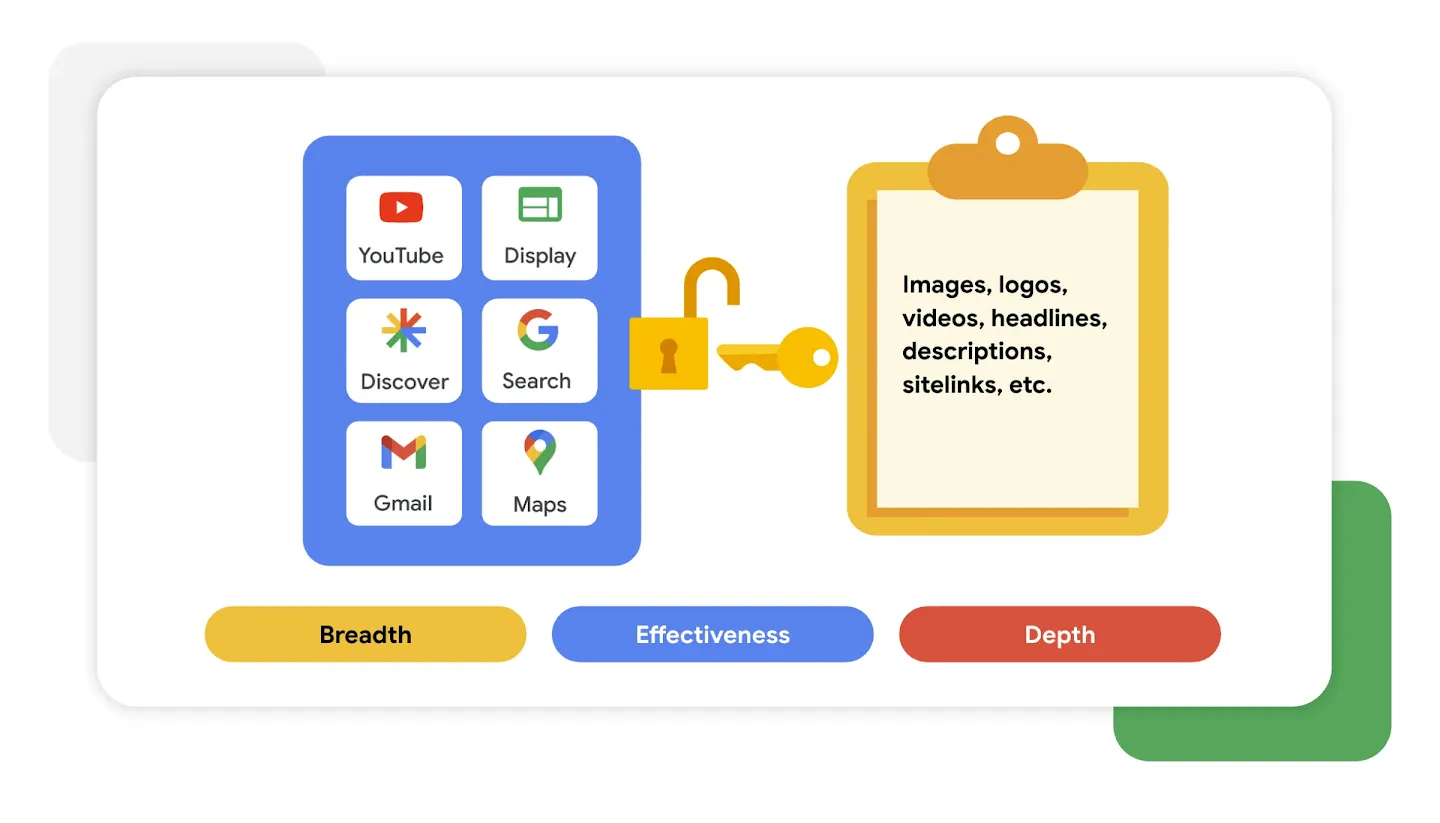
To maximise conversions, your brand must be present across all of Google’s channels, delivering the right message to the right person at the exact moment of intent. However, accessing the diverse inventory of YouTube, Search, Maps, and Gmail with PMax requires more than just presence; it requires a deep collection of specific creative assets tailored to each surface. By providing a wide variety of creative assets, you move beyond limited placements and give the AI the input it needs to test, learn, and identify the most efficient combinations for your customers.
Thematic Asset Architecture
Variety drives relevance across YouTube, Search, Maps, and Gmail, but organisation is what drives results. Avoid "one-size-fits-all" asset groups that attempt to cover your entire catalogue. Instead, align your creative assets with specific business themes—for example, separating "Premium Outdoor Gear" from "Family Camping Kits." This thematic clarity allows the AI to understand the context of your products and match your ads to users with specific, high-intent needs. When assets are tightly themed, the AI can more effectively determine which headline or image will resonate with a specific shopper’s search history and preferences.
Key tip! Thematic Grouping for Relevance: Move away from "all-in-one" asset groups. Use specific product themes to ensure the AI pairs your best creative with the right consumer intent.
AI-Driven Creative Excellence
High-quality creative is the primary driver of ad effectiveness. Use generative AI tools within your campaign setup to rapidly iterate on headlines, descriptions, and imagery and scale your reach through a wider volume of assets. These tools allow you to generate assets based on your landing page content, ensuring brand consistency while providing the variety AI needs to test.
Multi-Format Video Strategy
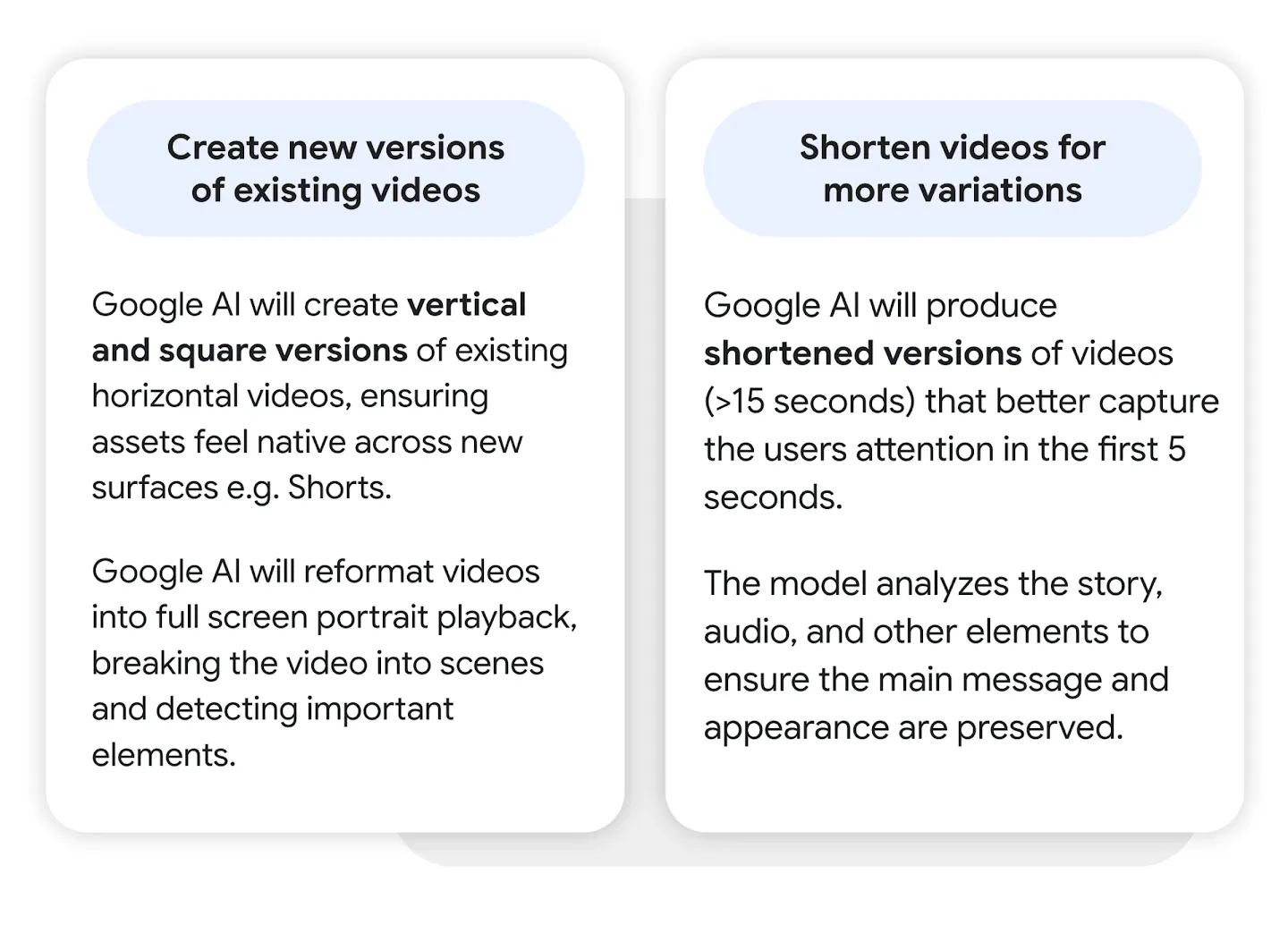
Vertical video is the primary medium for modern discovery, particularly on mobile. Use Google AI to automatically reformat horizontal assets into vertical and square formats for YouTube Shorts and Discovery feeds. This "native feel" ensures your brand fits the platform's style and doesn't look like a repurposed TV spot.
By providing high-quality video in all orientations, you allow the AI to place your brand in more inventory across the Google ecosystem - in fact,Performance Max campaigns with Video Enhancements saw over 7% increase in conversion value on YouTube at a similar CPA.²To further optimise for shorter viewing experiences Google AI can also intelligently trim your longer videos into punchy, high-impact clips.
Key tip: Boost Brand Love with Video Assets
To build brand love and drive results in an AI-first market, diversify your creative approach:
Drive Authentic Connection: Users crave brand authenticity - present your products through inspirational, real-world voices and in contexts that will help drive brand love.
Optimise Format Mix: Providing square, horizontal, and vertical assets can lead to a 20% conversion increase².
Prioritise Video: Campaigns featuring video see 12% more incremental conversions² than those without.
2. Strategic Tools for Creative Excellence
Now you’ve got your strategy sorted, it’s time to nail down the right tools for your unique goals. This suite of AI-powered tools is designed to scale your creative output, without increasing your workload.
Generated Assets in Performance Max (PMax): Integrated directly into the campaign builder, PMax allows you to generate high-quality text and image assets instantly. You’ll benefit from campaigns that consistently achieve top-tier ad strength ratings, while still retaining full creative control through the ability to review, revise, or even remove any AI-generated asset you’re not completely happy with before it goes live. Here’s how it looks in action:
Play silent looping videoPause silent looping video
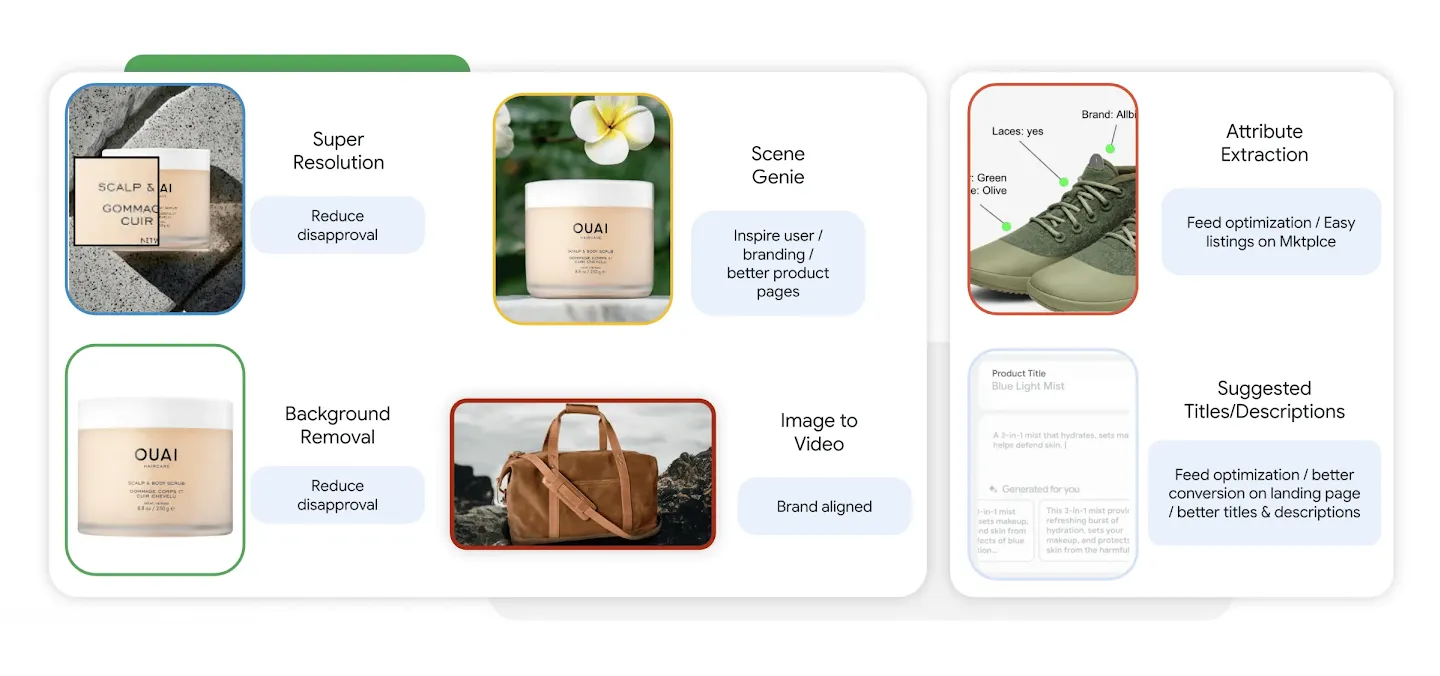
Product Studio (via Google Merchant Centre): Today, high-quality imagery is a non-negotiable for consumer trust. Product Studio offers free, AI-powered tools to instantly enhance image resolution or remove distracting backgrounds. You can even use "Scene Genie" to place your products in realistic, brand-aligned lifestyle settings, or transform static product images into dynamic, professional videos.
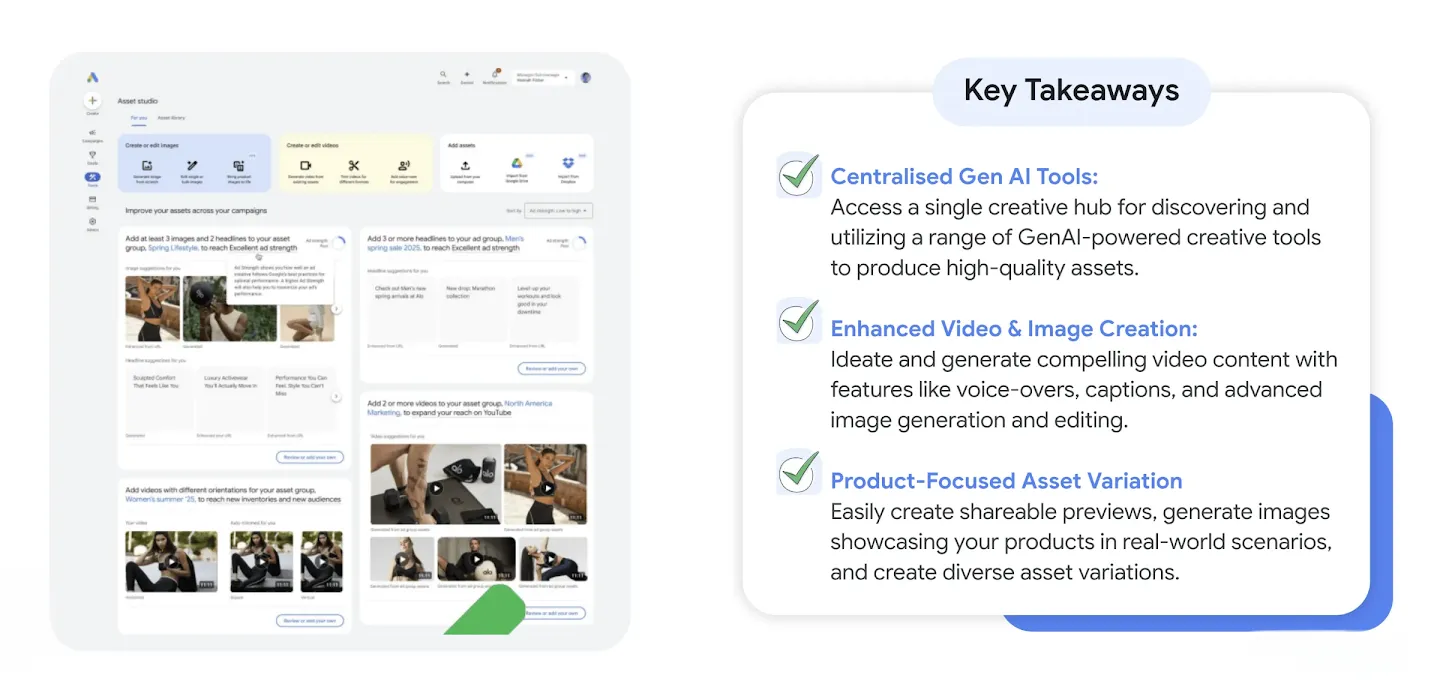
Asset Studio: Serving as your centralised creative hub within Google Ads, Asset Studio simplifies complex production tasks. Use it to build high-impact video content complete with automated voice-overs and captions, or to rapidly generate multiple versions of your creative that showcase products in diverse, real-world scenarios.
Key tip: When to Pair Performance Max with Standard Shopping
Integrating Standard Shopping alongside PMax’s broad reach and cross-channel scale, can provide lever-by-lever control to meet specific business objectives. This hybrid approach is recommended when:
Granular Budget Control: Managing strict budget silos for local, co-op, or specific business lines that require dedicated funding.
Specific Bidding Strategies: Utilising manual strategies like 'Maximise Clicks' to drive traffic to specific SKUs or channel-specific campaigns, regardless of early conversion signals.
Inventory Balancing: Maintaining control during product launches or organising "zombie" inventory that needs an extra push.
Strict Governance: Ensuring compliance for brands that have restricted access to certain Google channels due to safety or legal regulations.
3. PMax: Your Engine for Success and Innovation
Performance Max remains the cornerstone of a successful commerce strategy because it is built to adapt. Much like the modern customer, who is constantly adjusting their preferences and behaviour, the platform continuously shifts to better bridge the gap between brand and buyer. Recently, Google launched a wide variety of features, aimed at providing more transparency and ways to steer AI and designed to grant you greater transparency and more precise controls.
These innovations empower you to optimise and capture consumer intent more effectively across the four essential touchpoints: shopping, scrolling, streaming, and searching. Ready for a deeper look?
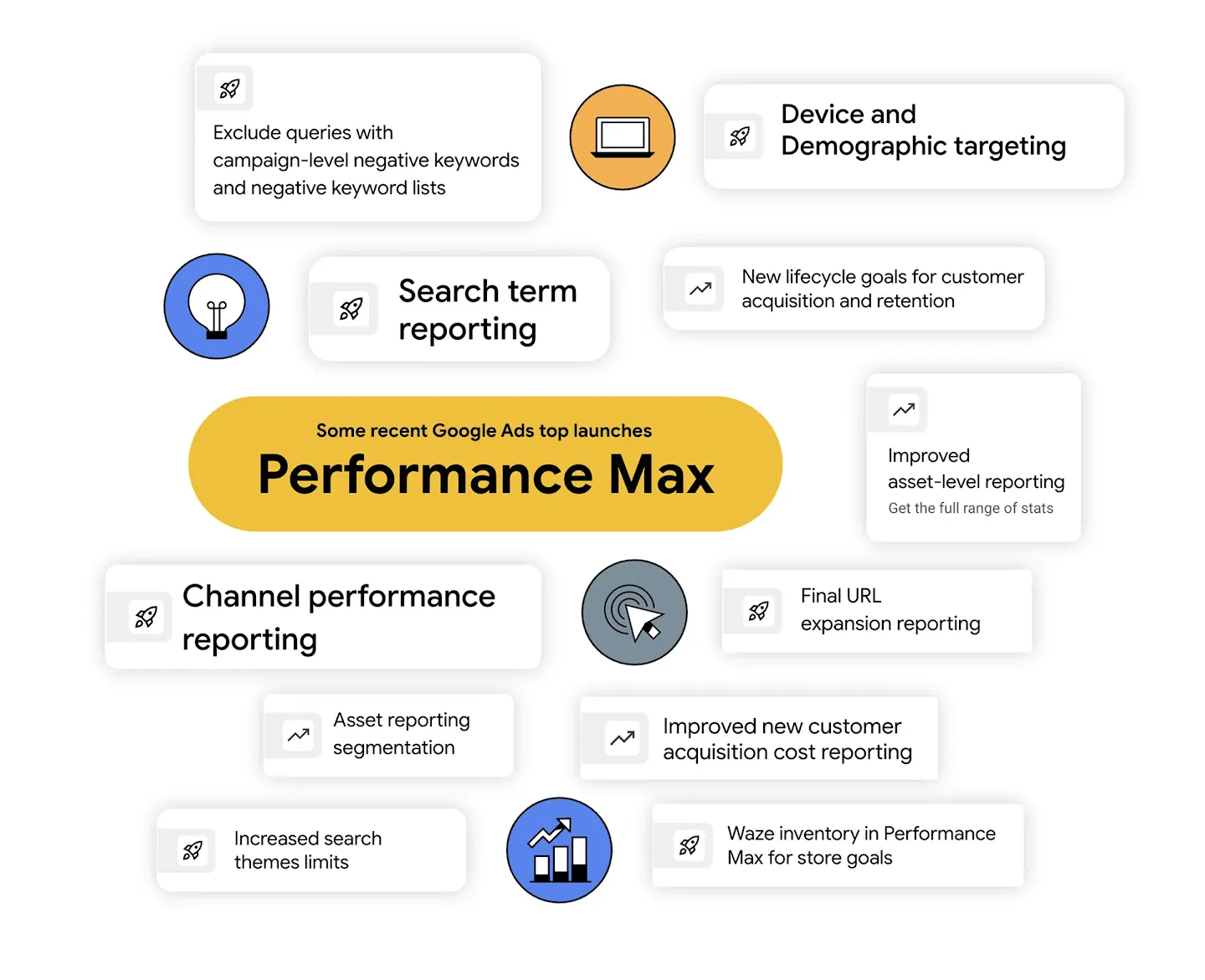
Enhanced Targeting and Reporting: recent updates to Performance Max include new device targeting (Device and Demographic), new lifecycle goals for customer acquisition and retention, and improved reporting (asset-level and new customer acquisition cost reporting).
Campaign Optimisation Updates: Three key updates to help optimise PMax performance include:
Product-Level Campaign Insights: Provides transparency by showing how individual products perform across different campaigns.
First-Party (1P) Audience Exclusions (Beta): Offers brand protection by allowing you to block unqualified leads and frequent returners.
Rewarding Loyalty: Uses membership pricing to highlight exclusive member-only pricing and shipping directly on search pages (as of early 2026, this feature is live in GB, DE, FR, IT, ES, NL).
The Centralised Engine for Growth: Performance Max remains the primary cross-channel driver for commerce, delivering a median 19% increase in conversions or conversion value3. It’s also the only campaign type that can optimize towards a Marginal ROI (mROI) logic and will be ready to access future-proofed channels, such as Ads in AI Overviews, when launched.
Conclusion: Elevating Your Strategy From Manual Management to AI Navigation
As you can see, the shift to an AI first strategy isn’t about losing control, but about elevating your role from a hands-on administrator to a higher level strategist. By placing PMax at the centre and using specialised tools like Product and Asset Studio, now is the time for you to move beyond the constraints of manual bidding and step into a model defined by precision, scale, and agility.
Success hinges on the quality of your inputs: your data, your structured creative themes, and your ability to guide the AI toward clear business objectives such as loyalty and acquisition. As these agentic capabilities continue to evolve, your ability to adapt and provide strong strategic direction will be the key driver of success. With the right approach, and a flexible attitude, you can ensure your brand remains visible and compelling across every stage of the customer journey for years to come.
Sources:
1Google, Europe State of Retail 2026. Shared by Google with Premium CSS Partners 2Google, 2024. Shared by Google with Premium CSS Partners 3Creative in Performance Max Playbook 2025, Shared by Google with CSS Premium Partners